

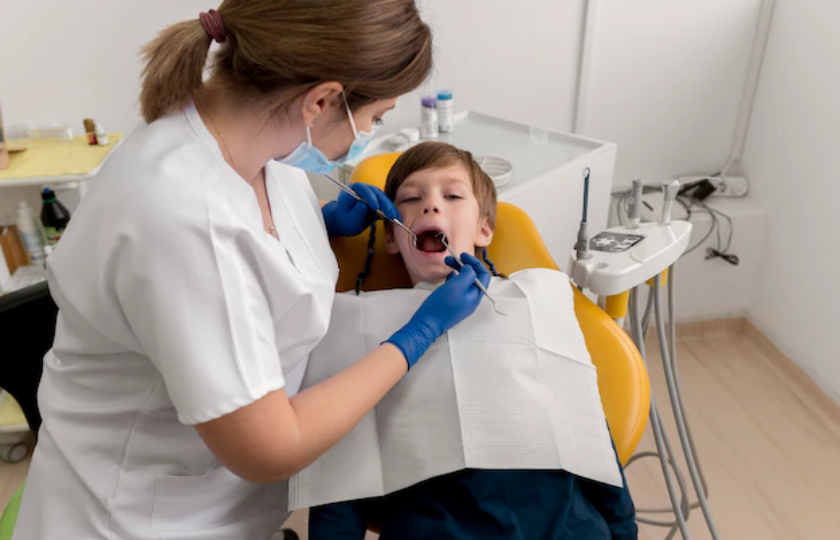
You might be feeling a mix of worry and guilt every time your child’s dental checkup comes around. Maybe there was a cavity at the last visit. Maybe your child fights you every night when you bring out the toothbrush. With child-focused dental care in Cary, you can get support that fits your reality. You know their teeth matter, yet real life is busy, they are stubborn, and you are tired.
If that sounds familiar, you are not alone. Many parents quietly wonder if they are “messing up” their child’s teeth, especially when the dentist starts talking about sugar, brushing, and flossing. It can feel like one more area where you are supposed to get everything right, with very little guidance on what actually works at home.
The good news is that you have more influence than you may realize. When parents are consistently involved, children tend to get fewer cavities, have less fear of the dentist, and grow up with healthier habits that follow them into adulthood. This is the heart of the importance of parental involvement in pediatric dental care. Your daily choices, even small ones, can change your child’s oral health story in a big way.
So where does that leave you right now. It means you can stop aiming for perfection and start focusing on a few simple, steady actions that protect your child’s teeth and build their confidence around dental care.
Why do children struggle with dental habits, and why are parents so important?
Think about a typical evening. Your child is tired, maybe cranky, and the last thing they want to do is stand in the bathroom for two minutes brushing their teeth. You might be juggling dinner, homework, and bedtime routines, and if brushing turns into a battle, it is tempting to rush through it or skip it “just this once.”
Because of this tension, you might wonder if baby teeth really matter that much. After all, they fall out anyway. This is where problems begin. Early childhood cavities are common, painful, and can affect eating, sleep, speech, and even self-esteem. They can also lead to infections and more complex treatment later on.
Research shared by public health agencies on oral health in young children shows that early tooth decay is one of the most common chronic conditions in childhood, yet it is largely preventable. That prevention starts at home, with you.
A child simply cannot manage proper brushing and flossing alone in the early years. Even older kids who “know how” often do not do it well without supervision. This is why parental guidance in children’s dental care is so powerful. You are the coach, the role model, and the one who builds routines that stick.
So if children resist and parents are stretched thin, what actually helps things change.
What happens when parents step in consistently, versus leaving it to chance?
Imagine two different families.
In the first family, the child brushes on their own most nights. The parent calls out from another room, “Did you brush your teeth.” The child says yes, even though they swished water around for 10 seconds and called it done. Dental visits are spaced out and sometimes missed when life gets busy. Cavities show up, and each visit turns into an anxious experience filled with shots and fillings.
In the second family, the parent is involved every night. They help their child brush, or at least watch closely, and they make it a calm, predictable part of the evening, like reading a story. Dental visits are regular, starting by the first birthday or within six months of the first tooth, following guidance from pediatric dental experts. Most visits are quick and easy. The child learns that the dentist is not someone to fear.
Both families love their child. The difference is not love. It is involvement.
When parents are present and consistent, several things happen. Plaque is removed more effectively. Problems are caught earlier. Children learn that their mouth matters. They also learn by watching you. If you treat brushing as non-negotiable and normal, they will eventually see it the same way.
Over time, this kind of support reduces cavities, saves money on urgent dental work, and helps your child grow up confident in the dental chair. That is the quiet strength of strong parental involvement in pediatric oral health.
So how do you balance all this with real life and limited time.
What are the real tradeoffs of “hands-off” vs involved dental parenting?
It can help to see the difference between a more “hands-off” approach and an “actively involved” one. Not as a judgment, but as a way to understand the real-world tradeoffs you are making.
| Approach | Short-term Experience | Likely Long-term Outcome |
|---|---|---|
| Child brushes alone, with little supervision | Less conflict at bedtime, faster routine | Higher risk of cavities, more fillings, higher costs, more fear of the dentist |
| Parent assists or supervises brushing twice a day | Takes a few extra minutes, occasional pushback | Fewer cavities, simpler visits, lower costs, more trust in the dentist |
| Dental visits only when there is pain | Fewer appointments in the short run | More emergencies, more complex treatment, missed school and work |
| Regular preventive visits with a pediatric dentist | Scheduled time off work or school | Early detection, less invasive care, better long-term oral health |
Guidelines from pediatric dentistry organizations, including those in formal oral health care recommendations for infants and children, consistently show that early and routine care leads to better outcomes. When you choose involvement, you are trading a few extra minutes each day for years of fewer problems.
So what can you realistically start doing today to support your child and your pediatric dentist.
What simple steps can you take right now to protect your child’s teeth?
You do not need a perfect schedule or fancy tools. You need a few clear actions that you repeat, even when life is messy. These three steps give you a strong foundation.
1. Make brushing a shared, non-negotiable habit
For children under 6 to 8, treat brushing as a “team sport.” You can let them try first, then you finish. Use a small, soft toothbrush and a smear or pea-sized amount of fluoride toothpaste depending on their age. Aim for two minutes, twice a day. At night, try brushing at the same time every evening, so it feels like part of the rhythm of the day, not a surprise request.
If your child resists, stay calm and consistent. You might sing a short song, use a visual timer, or brush your own teeth at the same time so they feel less singled out. The goal is not perfection. The goal is regular contact between toothbrush, toothpaste, and every surface of their teeth.
2. Partner with your pediatric dentist, not just visit in a crisis
A pediatric dentist is trained to work specifically with children, including those who are anxious, very young, or have special health needs. Try to schedule a first visit by age one or soon after the first tooth appears, then follow the schedule your dentist recommends, usually every six months.
Use these visits as coaching sessions for you as well as checkups for your child. Ask the dentist to show you how to brush your child’s teeth, how much toothpaste to use, and what to watch for between visits. Share any struggles you are having at home. A good pediatric dental team will not judge you. They will help you find what works for your family.
3. Shape the daily environment around your child’s teeth
Parental involvement is not only about brushing. It is also about the choices you control around food and drinks. Try to keep sugary snacks and drinks to set times instead of letting your child sip or snack all day. Frequent sugar exposure feeds the bacteria that cause cavities.
Offer water between meals, especially tap water if it is fluoridated in your area. Be careful with sticky snacks like gummies and dried fruit, which cling to teeth. When treats are part of life, combine them with meals, then follow with water and brushing later.
These small, steady actions add up. Together they form the core of children’s dental care that actually works in real homes, not just in theory.
How can you move forward with more confidence and less guilt?
You do not need to fix everything overnight. You simply need to decide that your presence in your child’s oral health really matters, then choose one or two changes to start with. Maybe tonight you stand next to them and help with brushing. Maybe you schedule the dental visit you have been putting off. Maybe you swap one sugary drink for water.
Each small step is a way of saying, “Your health matters, and I am with you.” That is the real power behind the importance of parental involvement in pediatric dental care. It is not about being perfect. It is about being present, curious, and willing to keep trying.
Your child does not need a flawless parent. They need a caring one who shows up for their teeth, one day at a time.
